
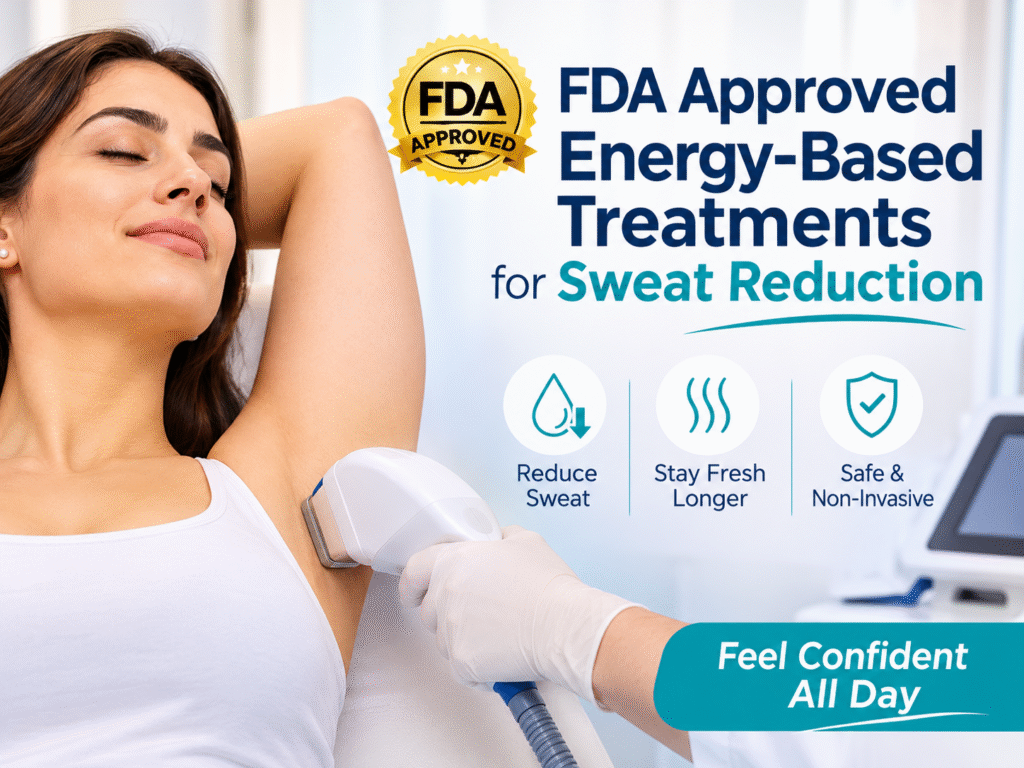
If you’ve spent years carrying spare shirts, avoiding handshakes, or steering clear of light-coloured clothes, you already know that sweat reduction is more than a cosmetic wish. For many people it’s about comfort and confidence in everyday life. The good news is that options have moved well beyond prescription antiperspirants. Energy-based devices can now target the sweat glands themselves, and a few carry regulatory clearance in the United States. This guide explains which ones, how they work, what recovery feels like, and how to decide what suits you.
First, a Quick Note on “FDA Approved” vs. “FDA Cleared”
You’ll see both phrases online, and they are not interchangeable. Most aesthetic and medical devices are cleared by the FDA, usually through a pathway that shows a device is safe and effective for a stated use. “Approved” is a stricter route generally reserved for higher-risk devices and for drugs.
Why does this matter? Because a clinic that says “FDA approved” without naming the device and the specific use may be stretching the truth. A trustworthy provider should be able to tell you:
- The exact device name and manufacturer
- What the clearance actually covers (for example, underarm sweating only)
- Whether your planned treatment area falls inside that clearance
What Is Hyperhidrosis, and Who Is It For?
Excessive sweating beyond what the body needs to regulate temperature is called hyperhidrosis. It often affects the underarms, palms, soles and face. Focal (primary) hyperhidrosis tends to start in childhood or the teens and runs in families. Sweating that begins suddenly in adulthood, or comes with fever, weight loss or night sweats, can have another cause and deserves a medical check first.
Energy-based treatments are generally considered for people who:
- Have tried antiperspirants or topical products without enough relief
- Want a longer-lasting option than repeat injections
- Are bothered mainly by underarm sweat and odour
- Prefer a procedure that is done in the clinic with little or no downtime
How Energy-Based Sweat Reduction Works
Your underarms contain two main kinds of glands: eccrine glands, which produce watery sweat, and apocrine glands, which contribute to odour. Energy-based devices deliver controlled heat to the tissue layer where these glands sit, while the skin surface is cooled to protect it. Heat damages the glands, and because the body does not regenerate them in the same way, the effect on the treated glands is long-lasting.
The idea is simple: instead of blocking sweat after it forms, you reduce the number of glands able to make it.
The Main FDA-Cleared Option: Microwave Energy (miraDry)
The best-known device in this category is miraDry, which uses microwave energy. It received FDA clearance for reducing underarm sweat, and the clearance also covers reduction of underarm hair of all colours.
What happens during treatment
- The underarm area is marked with a template so the device is placed precisely
- Local anaesthetic is injected to keep you comfortable
- A handpiece delivers microwave energy while cooling the skin surface
- A session usually takes about an hour
What to expect afterwards
- Swelling, tenderness and some bruising are common for a few days
- Temporary numbness or altered sensation in the underarm can occur and usually settles over weeks to months
- Many people return to routine activity quickly, though strenuous workouts are often paused briefly
- Most protocols involve one or two sessions, spaced a few months apart, depending on the result
Clinical studies have reported significant average reductions in underarm sweat, although individual results vary. A good clinician will talk about a realistic range rather than promise “zero sweat”.
If you’d like a deeper walk-through, our guide on how MiraDry treatment works to reduce underarm sweating covers the procedure step by step.
Other Energy-Based Devices You May Hear About
The field is evolving, and not every device you read about has clearance for sweat reduction. Here is an honest snapshot.
- Iontophoresis devices: These pass a mild electrical current through water to the palms or soles. Several are FDA-cleared for hyperhidrosis. They are non-invasive but need regular, ongoing sessions to keep the effect.
- Newer patch-based systems: Some recently cleared devices apply targeted energy through a patch placed on the underarm. Availability and clinical experience vary by country, so ask your clinic what is actually offered locally.
- Radiofrequency microneedling and laser approaches: Some clinics use these for underarm sweating, but this is often off-label, meaning it is outside the device’s cleared purpose. That does not automatically make it unsafe, but you deserve to be told clearly.
Non-Energy Alternatives Worth Knowing
An honest comparison includes options that do not use energy at all.
- Clinical-strength antiperspirants: Aluminium-based products are the usual first step and are inexpensive
- Prescription topical medicines: Some are approved for underarm sweating and are applied at home
- Botulinum toxin injections: FDA-approved for severe underarm sweating, they work by temporarily blocking the nerve signal to sweat glands, and usually need repeating every several months
- Oral medicines: These can reduce sweating widely but may cause side effects such as dry mouth
- Surgery: Reserved for selected cases when other options have failed
Comparing the Options at a Glance
- Microwave energy: Longer-lasting for underarms, done in-clinic, minor downtime, higher upfront cost
- Iontophoresis: Good for hands and feet, needs ongoing sessions, low risk
- Botulinum toxin: Effective but temporary, repeat visits needed
- Topicals and antiperspirants: Easy and affordable, but results can be limited in moderate-to-severe cases
Safety, Side Effects and Who Should Wait
Every procedure carries trade-offs. With energy-based underarm treatment, the most commonly reported effects are short-term swelling, soreness, bruising and temporary numbness. Less commonly, people report lasting changes in sensation or skin discolouration. Rare complications are possible, which is why technique and experience matter.
You may be asked to postpone or avoid treatment if you:
- Are pregnant or breastfeeding
- Have an implanted electronic device near the treatment area, such as a pacemaker
- Have an active skin infection or open wound in the underarm
- Have not yet had other causes of excessive sweating ruled out
A proper consultation should include a medical history, a physical check and an honest conversation about risks, not just a price quote.
How to Choose the Right Clinic
The device matters, but the person using it matters just as much. Before you book, look for:
- A qualified, licensed doctor who personally assesses you
- Clear information on which device is used and what its clearance covers
- Before-and-after photos from real patients, shown with consent
- A transparent discussion of expected results, side effects and aftercare
- No pressure to commit on the spot
If you’re comparing clinics, a short consultation is the easiest way to judge whether you feel heard and informed. You can book an appointment to talk through your options without any obligation.
Frequently Asked Questions
Is energy-based sweat reduction permanent?
The treated sweat glands do not typically regrow in the same way, so results are described as long-lasting. Still, untreated glands nearby can continue to work, so some sweating usually remains.
Does it hurt?
Local anaesthetic is used, so most people feel pressure and warmth rather than sharp pain. Soreness afterwards is common and temporary.
How many sessions will I need?
Many people need one or two sessions. Your doctor will decide based on how you respond.
Will it affect my body’s ability to cool down?
The underarms account for a small share of the body’s sweat glands, so treating them is not expected to interfere with normal temperature control.
Can it treat sweaty palms or feet?
Microwave treatment is cleared for the underarms. For hands and feet, iontophoresis or other medical options are more commonly used.
Is it suitable for everyone?
No. Your age, health, skin condition and the cause of your sweating all play a part, which is why an in-person assessment comes first.
The Takeaway
If antiperspirants have stopped working for you, energy-based treatments are a credible, evidence-backed next step, especially for underarm sweating. The key is to look past the marketing language: ask what is cleared, for what use, and who will be treating you. With the right expectations and the right clinician, long-term sweat reduction is realistic for many people.