
For many NRIs, a dental problem no longer means automatically booking an appointment in the UK, US, or UAE. Increasingly, patients living abroad are travelling to India for procedures ranging from smile design and veneers to full – mouth rehabilitation and dental implants.
The reason is not simply that treatment can cost less in India. Modern dental centres in major Indian cities combine advanced implantology, digital smile planning, experienced specialists, and relatively streamlined treatment timelines. For an NRI comparing treatment options abroad, cosmetic dentistry India NRI searches are increasingly becoming part of a broader question: can high – quality dental care be accessed in India without compromising safety, technology, or professional standards?
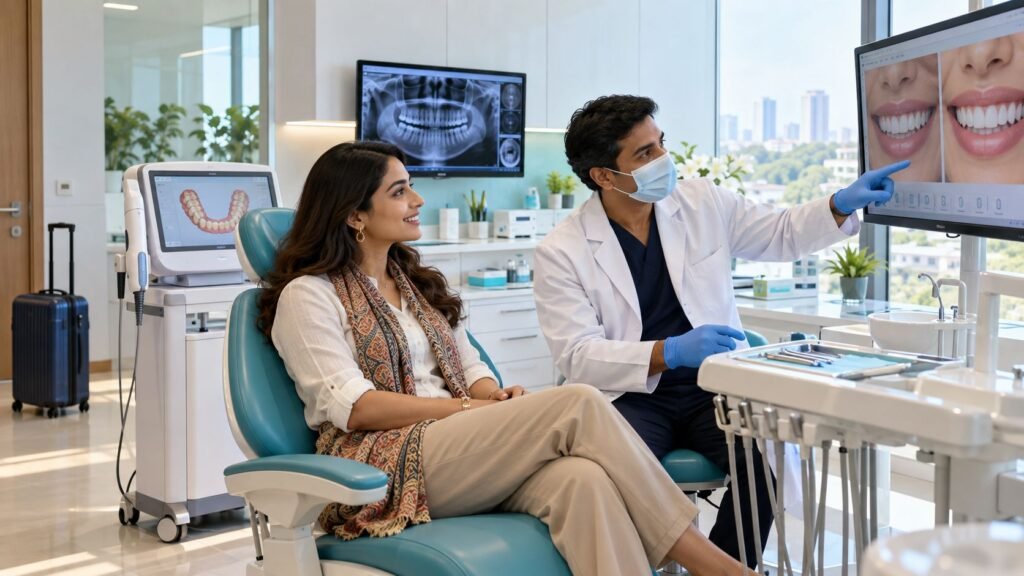
For patients considering implants in particular, India has become an important destination for dental tourism. The savings can be real and significant – but the right call still comes down to clinical fit, who’s doing the work, and what happens if something needs attention after you fly home.
Why Is Cosmetic Dentistry India NRI Patients Choosing?
The first attraction is cost. Dental procedures can be significantly more affordable in India than in countries such as the UK, US, or UAE. This is particularly relevant for extensive treatments involving multiple implants, crowns, veneers, or a complete smile makeover.
A second factor is access to specialist-led treatment. India has a large pool of dentists and specialists working with digital diagnostics, CAD/CAM technology, guided implant placement, digital smile design, and contemporary restorative techniques.
Then there is convenience. An NRI who needs several procedures may be able to coordinate consultations, diagnostics, surgery, and restorative work during a planned visit to India rather than managing appointments over months abroad.
That said, lower cost should never be confused with lower standards. Before you book anything, it’s worth doing a proper check – the dentist’s qualifications, whether the clinic is accredited, how they handle sterilization, which implant systems they use, and what follow-up looks like once you’re back home.
Basal Implants NRI India: Why Are They Attracting Attention?
Conventional dental implants generally require adequate supporting bone for placement. When bone volume is insufficient, patients may require procedures such as bone grafting or sinus augmentation before conventional implants can be placed.
Basal implants use the more cortical, or dense, areas of the jaw for support. That makes them worth exploring for patients who’ve lost a lot of bone and may not qualify for the standard implant route.
However, basal implants are not automatically the “better” option. Implant choice depends on the patient’s bone condition, oral health, systemic health, bite, restoration requirements, and the clinician’s assessment.
If you’re looking into basal implants specifically, the first question to ask your dentist is a simple one: why is this the right system for my situation?
Dr. Anand explains that patients travelling internationally should look beyond promotional claims and assess the credentials of the treating team. Accreditation, appropriate dental qualifications, documented clinical experience, diagnostic facilities, sterilization standards, and transparent treatment planning all matter.
Ask which brand and system they plan to use. Ask what paperwork you’ll leave with. And ask – plainly – what happens if something goes wrong after you’re back in the UK or the US.
Dental Tourism India Cost: How Much Can NRIs Save?
Exact costs vary considerably according to the clinic, dentist, implant system, complexity of treatment, number of teeth involved, laboratory work, and the patient’s existing oral condition.
Put plainly: the same extensive treatment that costs a lot in the UK, US, or UAE tends to cost noticeably less in India. When you’re talking about several implants and prosthetic teeth, that gap adds up fast.
A simplified comparison illustrates why patients investigate dental tourism India cost:
| Treatment | India | UK | US | UAE |
| Single conventional implant with crown | Generally lower | Generally higher | Generally higher | Generally higher |
| Full-mouth implant rehabilitation | Often significantly lower | High | Very high | High |
| Smile design/veneers | Generally lower | Higher | Higher | Higher |
| Digital smile planning | Available at specialist clinics | Available | Available | Available |
These figures are deliberately presented as relative ranges rather than fixed prices because quoting an international dental treatment without examining the patient is essentially medical astrology with a price tag.
Travel costs must also be included. Flights, accommodation, local transport, diagnostic tests, medications, and possible additional appointments can affect the overall calculation.
The sensible comparison is therefore total treatment cost plus travel and aftercare, not simply the advertised price of an implant.
Smile Makeover India vs UK Cost: Is the Difference Significant?
Smile makeovers can include veneers, crowns, teeth whitening, gum contouring, orthodontic treatment, or combinations of these procedures. The appropriate treatment depends on the patient’s teeth, gums, bite, facial proportions, and aesthetic expectations.
India can offer a considerable cost advantage for comprehensive cosmetic dentistry. That said, be wary of choosing a clinic just because the package looks cheap. Cheap and good don’t always go together.
A high-quality smile makeover begins with diagnosis and planning. Digital photographs, scans, radiographs, bite assessment, and digital smile design can help patients understand the proposed outcome before irreversible treatment begins.
When you’re putting India up against UK costs for a smile makeover, compare the actual plans – not just the headline numbers. How many veneers? What materials? Are temps included? What about follow-ups and revisions if the fit isn’t right?
What Does the NRI Patient Journey Look Like?
The process can be relatively straightforward when planned properly.
1. Remote consultation
Many international patients begin by sharing photographs, previous dental records, X-rays, or scans with the dental team. A video consultation may help establish the broad treatment requirements.
This is only a preliminary assessment. A definitive diagnosis generally requires an in – person clinical examination and appropriate imaging.
2. Treatment planning before travel
Once the patient arrives in India, the dental team can conduct detailed examinations and diagnostic imaging. The dentist then confirms whether the initial treatment proposal remains appropriate.
This matters even more for implant patients. Your bone levels, gum health, any existing infection, bite, and current restorations all need a proper look before anyone picks up a drill.
3. Treatment
Depending on the procedure, treatment may involve implant placement, temporary restorations, cosmetic preparation, or other dental procedures.
Patients should receive a clear written treatment plan covering the proposed procedures, expected timeline, costs, materials, and potential risks.
4. Review and restoration
Implant treatment may require multiple stages. The final prosthetic restoration should be fitted only after the clinician has assessed healing and implant stability according to the chosen treatment protocol.
Cosmetic procedures may have shorter timelines, but this varies with complexity.
5. Returning home
Before you get on that flight, make sure you’re leaving with everything in hand — your treatment records, the implant details, any prescriptions, post-treatment instructions, and a clear picture of what follow-up looks like.
That file matters when you’re back home and need a local dentist to pick up where the Indian team left off.
What Should NRIs Check Before Choosing a Dental Clinic?
Price should be one of the last filters, not the first.
Dr. Anand recommends that international patients investigate:
– The dentist’s recognized qualifications and clinical experience
– Relevant specialist training
– Clinic accreditation and quality standards
– Sterilization and infection-control protocols
– Diagnostic and imaging facilities
– Implant systems and restorative materials being used
– Laboratory support
– Written treatment plans and itemized quotations
– Emergency and complication-management protocols
– Follow – up arrangements after returning abroad
Patients should also ask whether the clinic routinely treats international patients and whether communication is available throughout the treatment process.
For implant procedures, keeping the implant passport, manufacturer information, operative notes, radiographs, and restoration details is especially useful.
Is It Worth Coming to India for Dental Implants From Abroad?
For many patients, it can be. But the answer depends on the individual treatment plan.
India brings a lot together in one place – experienced dentists, modern technology, and treatment costs that are often a fraction of what you’d pay abroad. For NRIs who need serious implant or cosmetic work, that combination makes a strong practical case for the trip.
However, travelling abroad for healthcare introduces additional considerations. A patient must account for travel, recovery time, follow – up appointments, unexpected complications, and coordination with a dentist at home.
The safest approach is to choose the clinician first and the destination second.
For someone researching basal implants India, the decision should be based on whether basal implants are clinically appropriate, who will place them, what evidence and experience support the proposed treatment, and how long-term maintenance will be managed.
Likewise, patients searching for dental tourism Bangalore should evaluate individual clinics rather than assuming that every provider offers the same standard of care.
The Bottom Line for NRI Patients
India’s growing appeal as a dental tourism destination is driven by more than affordable treatment. The combination of experienced clinicians, digital dentistry, implantology, cosmetic treatment options, and potentially shorter treatment timelines can make India an attractive option for patients living abroad.
But dentistry is not a souvenir you can return to the shop with if something goes wrong.
Before you book anything, get a proper diagnosis, look at actual treatment plans not marketing brochures, check the dentist’s credentials and the clinic’s standards, work out the full cost, and know exactly what aftercare looks like once you’re home.
For the right patient, making the trip to India for cosmetic dentistry or implants can deliver real value – without having to cut corners on clinical quality or professional care.
Frequently Asked Questions
For many people, yes. The key is making sure the treatment is actually right for you, and that the savings still hold up once you’ve factored in flights, accommodation, diagnostics, and follow – up. Always put the dentist’s qualifications and clinic standards above the price tag.
They can be an option for patients who’ve lost significant bone, but it’s not a one-size-fits-all answer. A qualified implant dentist needs to look at your specific anatomy and oral health before recommending anything.
Dental treatment in India is often less expensive than comparable treatment in the UK, US, and UAE, particularly for extensive procedures. However, prices vary by clinic, materials, complexity, and treatment requirements.
There’s no fixed answer. Cosmetic work can sometimes move quickly, but implant treatment often involves multiple stages spread over time. Get a realistic timeline from the clinical team after they’ve actually assessed you – don’t plan your trip around a package brochure.
Check the dentist’s recognized qualifications, implant experience, clinic accreditation, sterilization standards, diagnostic facilities, implant systems, treatment documentation, pricing transparency, and arrangements for follow-up after returning abroad.